

Liquid roofing explained. We’re here to show you how it works, when it can be used, and what you should know before choosing it.

What is a Liquid Applied Roof?
Before we dive in, you may have heard the term ‘cold liquid applied roofing’. And that’s because most modern liquid applied roofing systems used on commercial and industrial roofs are cold applied. So in everyday roofing conversations, the terms often get used interchangeably.
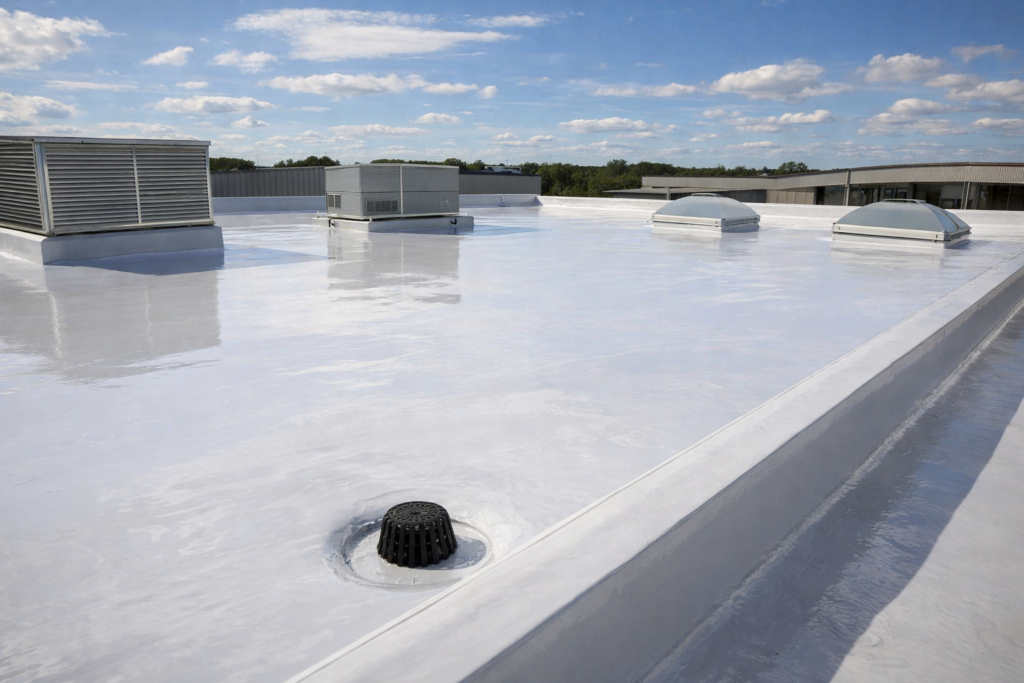
Otherwise, a liquid applied roof is exactly what the name suggests. It involves applying a liquid waterproofing membrane as a coating over a roof surface. This can be done on a new roof or used to make an existing roof waterproof again.
This type of roofing system is commonly used on flat and low-slope roofs. It’s often used on warehouses, factories, offices, retail buildings, and other commercial properties.
Can Liquid Roofing be Applied Over an Existing Roof?
In many situations, yes it can. But only if the roof’s structure is generally sound and stable.
In which case – a liquid roofing system can be applied directly over the current roof covering (such as metal roofing, asphalt, felt, concrete, and some membrane systems).
But if there are serious structural issues, they will need to be repaired first. It’s always important to get the current roof inspected first.
So It's Cheaper Than Replacing a Roof?
Providing the existing roof structure is in good shape – yes, in many cases, it is.
Make no mistake about it – replacing an entire roof is a large project. It takes time and requires a significant amount of labour.
Liquid roofing avoids much of that work. Since the coating is applied over the existing roof, there is less demolition and less building material involved.
There is also less disruption for businesses operating inside the building. Warehouses, factories, and commercial premises can often continue running while the work takes place.
Can Liquid Roofing Fix Leaks?
Yes, liquid roofing is often used to deal with leaking roofs.
When the coating is applied, it creates a continuous waterproof barrier across the roof surface. This helps seal small cracks, gaps, and weak areas where water may be entering.
Leaks often develop around roof lights, vents, joints, and edges. These areas can be difficult to seal using traditional materials, but liquid coatings can mould to these shapes more easily.
How Liquid Roofing Systems are Applied
Although the product itself is applied as a liquid, the installation process involves several important stages.
Inspection: The first step is a full roof inspection. This helps identify any damage that needs repairing before the coating is installed.
Preparation: Once the condition of the roof has been assessed, the surface must be prepared. Dirt, debris, moss, and loose materials are removed so the coating can bond properly.
Repair Work: If needed, small repairs are carried out at this stage. This may include sealing cracks or reinforcing weak areas. Depending on the roof type, a primer may also be applied. This helps the liquid system attach firmly to the existing surface.
Application: The liquid coating is then applied using rollers, brushes, or specialist spray equipment. Because it starts as a liquid, the coating spreads across the surface and follows the shape of the roof. It covers joints, fixings, edges, and other difficult areas that are often vulnerable to leaks. As the coating cures, it forms a waterproof membrane across the entire roof.

Types of Liquid Roofing Systems
Different liquid systems are available, and each type has its own strengths. The right option depends on your building, the roof material and the condition of the surface.
Polyurethane Coatings
Polyurethane liquid systems are known for their durability. They perform well in areas with heavy rainfall or standing water.
Good for: Roofs that receive occasional foot traffic.
Acrylic Coatings
Acrylic liquid coatings are often used for UV protection. They reflect sunlight well, which can help reduce heat build-up on the roof surface.
Good for: Metal roofs, and can also help slow down corrosion.
Silicone Coatings
Silicone liquid roofing systems perform well in wet conditions. They resist moisture and can handle ponding water better than some other coatings.
How Long Does a Liquid Applied Roof Last?
Most liquid applied roofing systems will typically last and provide protection between 15 and 25 years, depending on the product used and the condition of the roof underneath.
Regular roof inspections can help extend this lifespan even further.
In some cases, a roof can even be recoated after many years, which adds another layer of protection and extends its service life again.
Because of this, liquid roofing is often seen as a long term solution rather than a short term repair.
Are There Any Disadvantages?
So we know liquid roofing has many benefits, but it’s not necessarily the answer for every roof.
For example, if a roof has severe structural damage, simply coating over it will not solve the underlying problem. In those cases, a more extensive repair or replacement may still be required.
Weather can also affect installation. Many liquid systems need dry conditions during application and curing, which means scheduling can sometimes depend on the forecast.
Speak to Storm Industrial Roofing
At Storm Industrial Roofing, we specialise in commercial and industrial roofing and cladding across the UK. Our team carries out detailed roof inspections and recommends solutions that suit your building and budget.
If your roof is starting to show signs of wear, it may be the right time to explore your options. Contact us today on 01543 504127 or email us at enquiries@stormindustrialroofing.co.uk today to arrange a free roof survey.